
Information
Pixel Island
Client:
Bcome, Busan Architecture Festival
Location:
Busan, South Korea
Size:
6,250m²
Collaborators:
Huey Design
Status:
Competition
Program:
Digital aquarium, gallery and retail
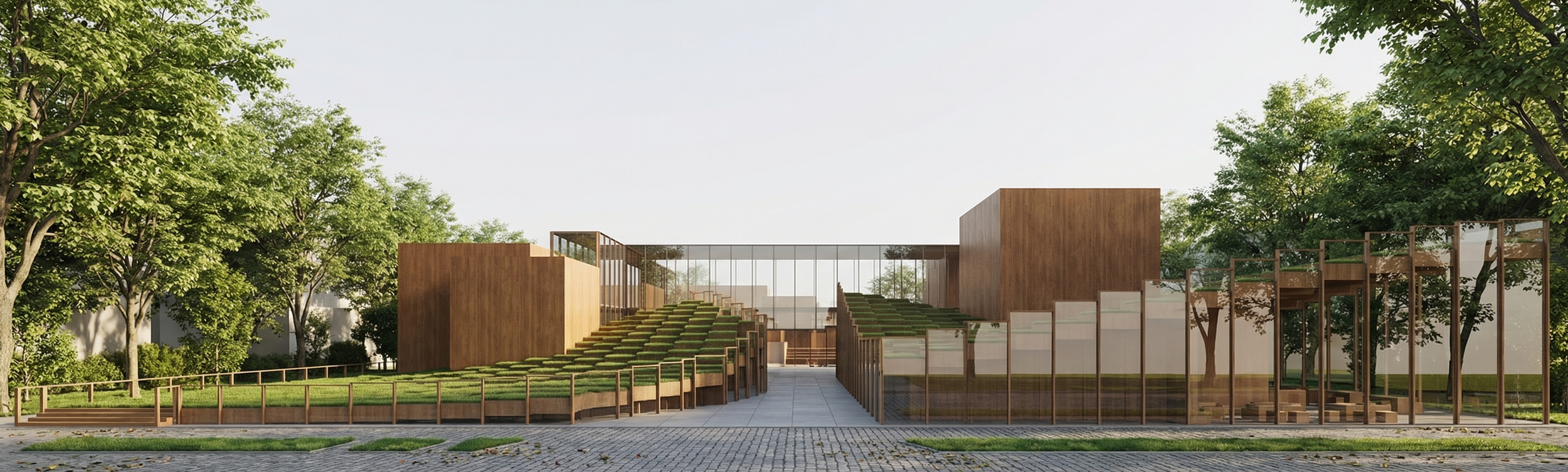
Designed as a flagship proposal for the World Expo 2030 Busan bid, Pixel Island serves as a physical laboratory for the Expo’s core theme: “Transforming Our World, Navigating Toward a Better Future.” The project is a monumental response to South Korea’s extraordinary socio-economic trajectory, a nation that expanded its GDP over 1,200 times between 1953 and 2020 through a strategic 1980s pivot toward electronics and digital infrastructure. Today, as the home to global tech pioneers like Samsung, South Korea’s prosperity is digitally delivered; Pixel Island translates this technological legacy into a tangible tool for environmental restoration and cultural reconnection.
World Expo 2030 Busan’s Three Pillars
The pavilion directly manifests the Expo’s strategic mission by weaving its three core pillars into the built environment. To achieve sustainable living with nature, the design reclaims the Busan coastline through a process of technological terraforming, creating a new ecological interface where the urban and the maritime coexist in a parametric landscape. This is further enhanced through technology for humanity, utilising advanced Korean LED-enabled glass and interactive media to bridge the sensory gap between urban citizens and the surrounding marine ecosystems. Finally, the pavilion embodies the principle of caring and sharing by offering a programmable, open-access landscape. This invitation for the community to participate in urban farming and social exchange ensures that the pavilion remains a living, communal asset that honours the city’s collective future and its deep-seated agrarian heritage.
Parametric Terraforming
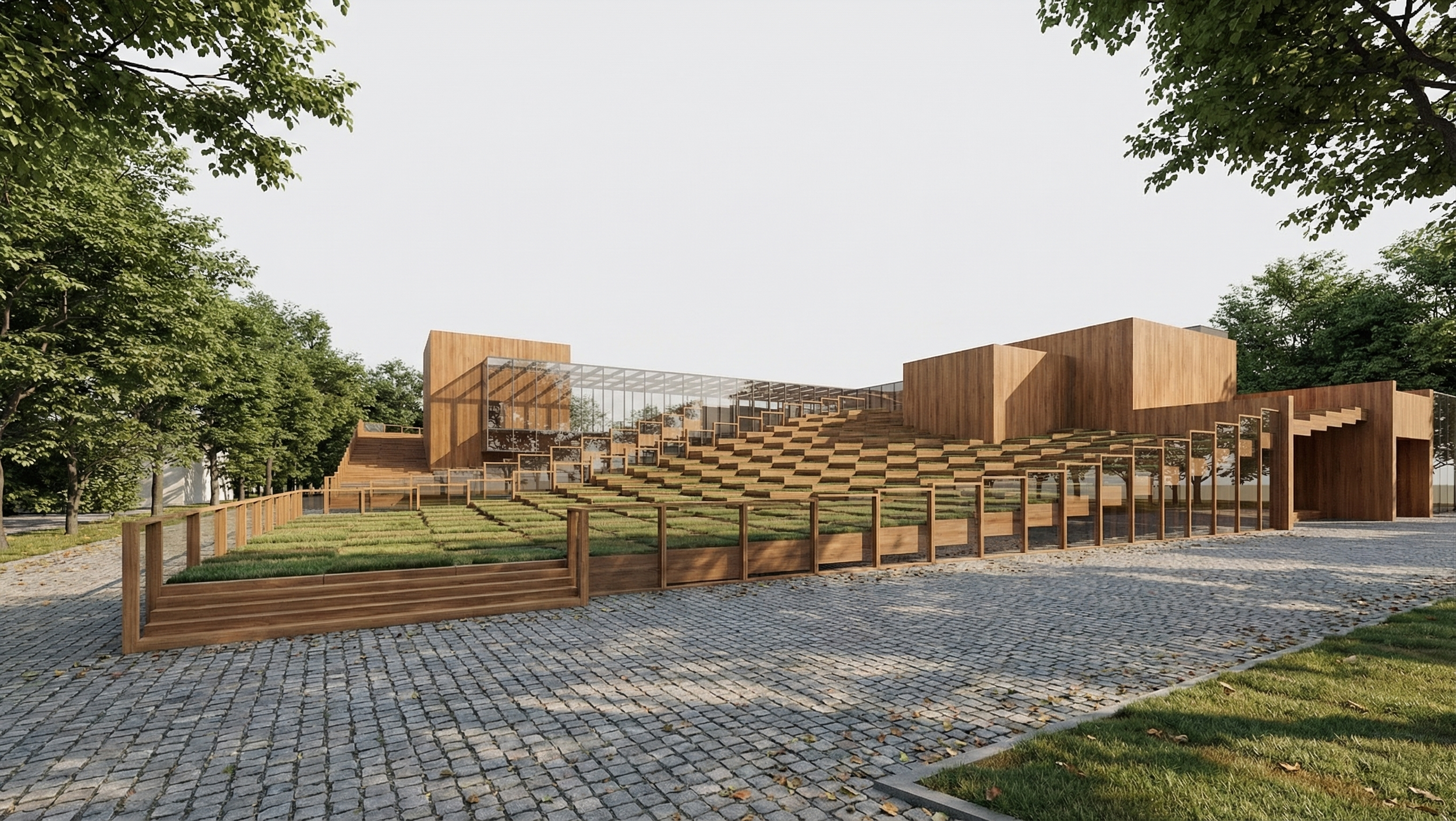
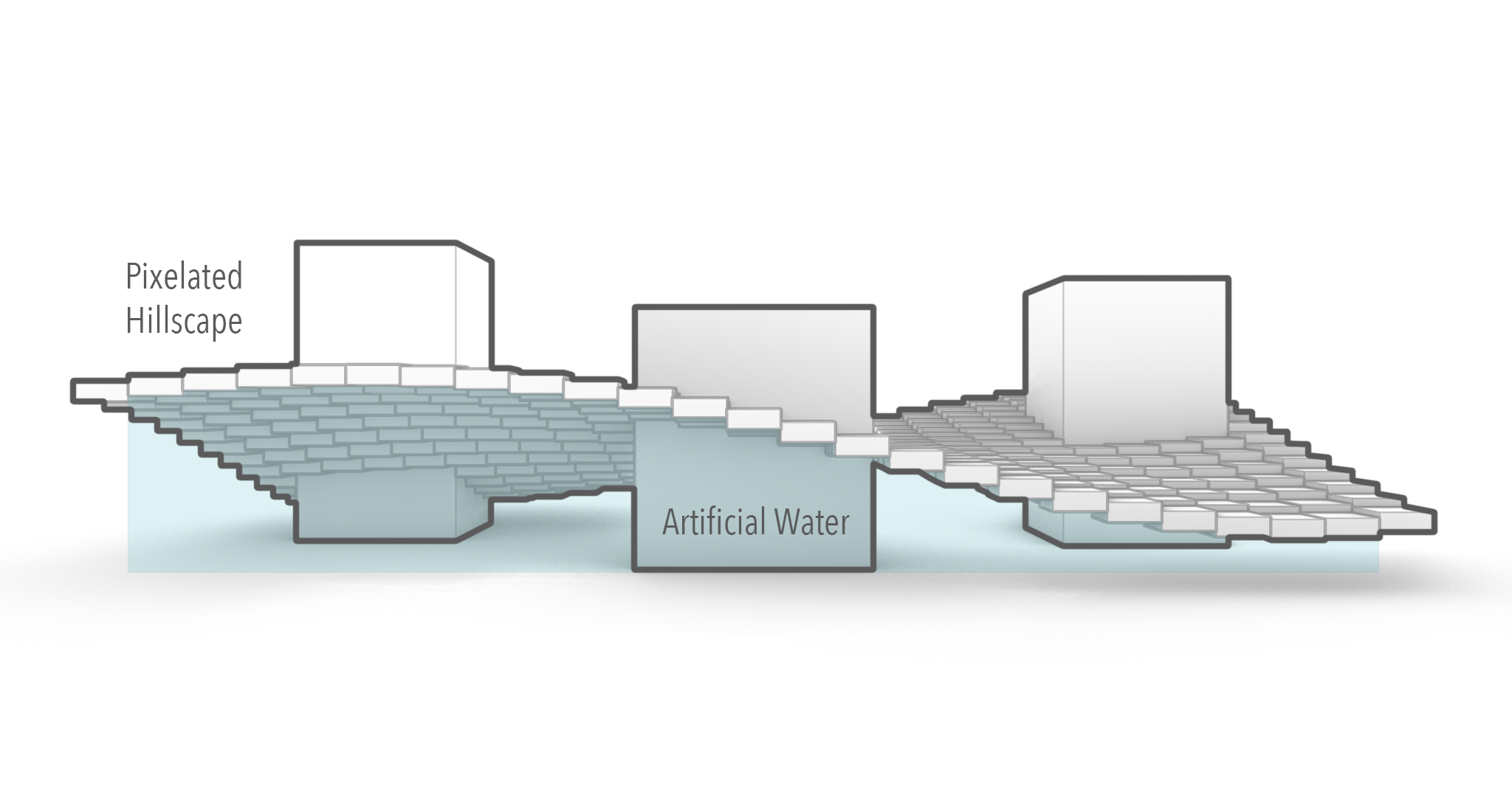
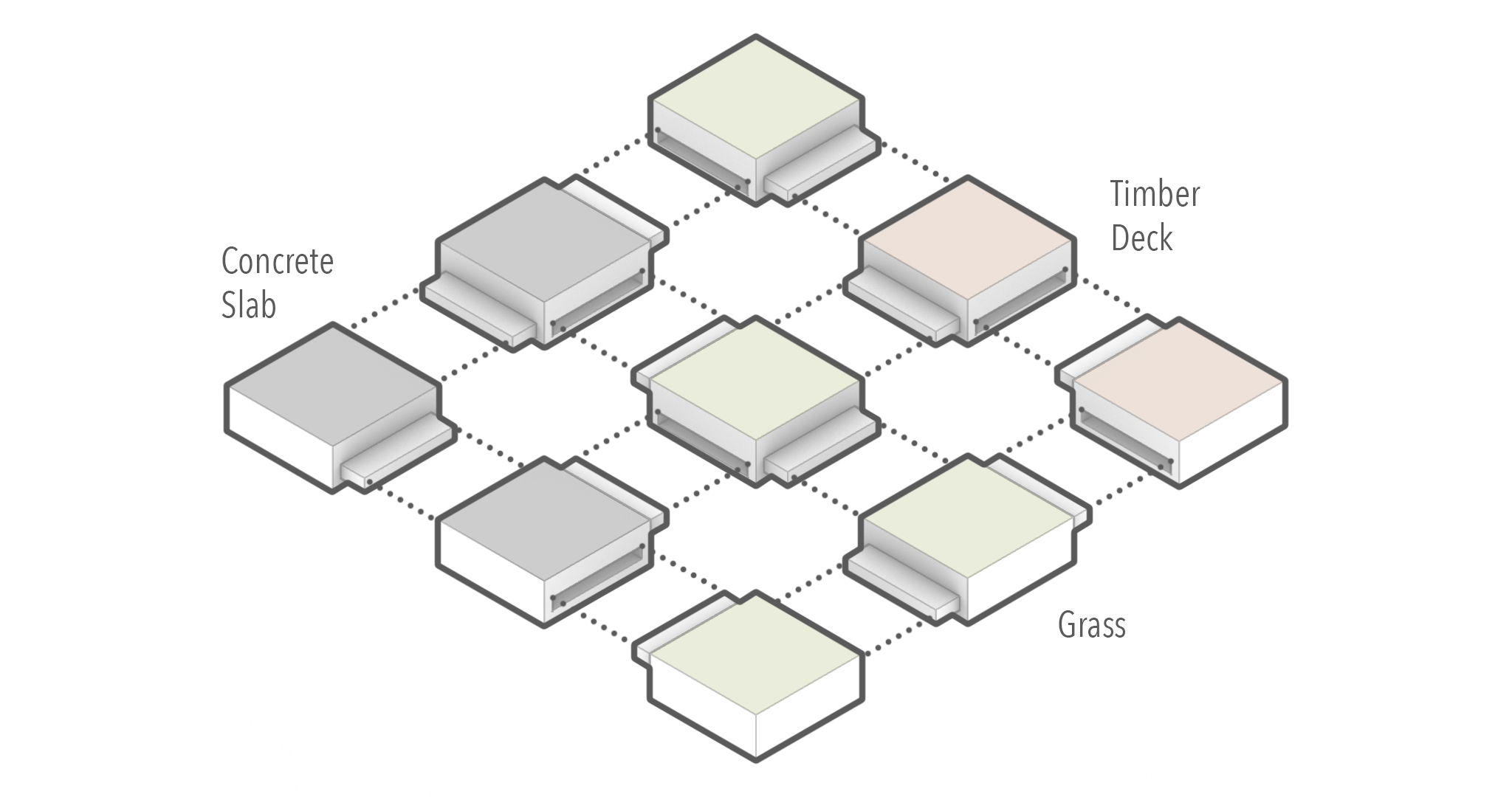
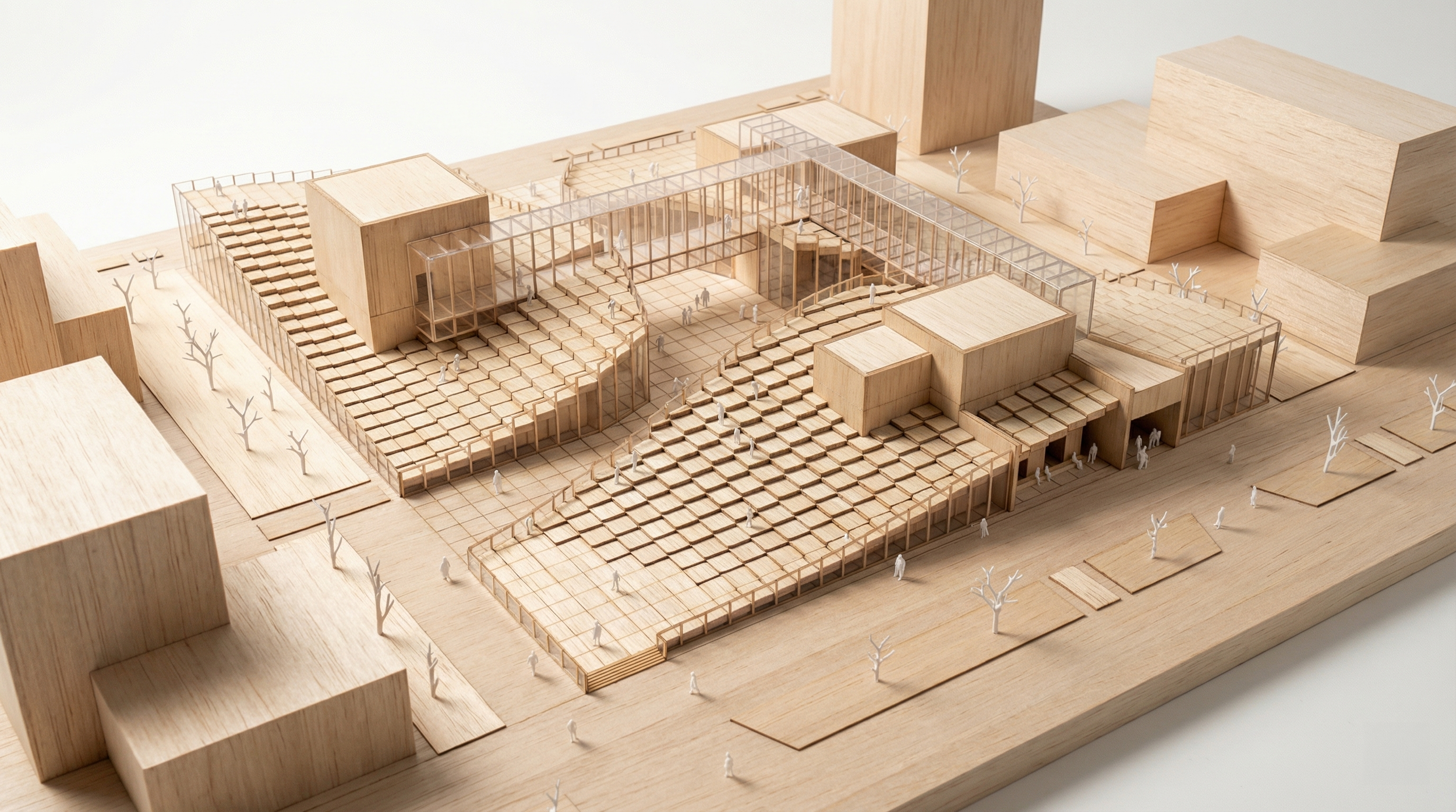
The pavilion’s form is rooted in the concept of technological terraforming. Using the cube as a fundamental unit, the project creates an artificial topography of hills and valleys that echo the natural landscape of Busan. This parametric roof is decomposed into a fixed puzzle of pixelated blocks- a programmable interface of grass, timber, and concrete. The design directly addresses the cultural evolution of the region: while Busan is now a global maritime and tech hub, its foundation was built upon deep-seated agrarian roots. As technology drove the transition from rural farming to an urban digital powerhouse, Pixel Island uses those same digital tools to close the circle. By treating the architecture as a modular landscape, the design introduces the potential for urban farming atop its geometric peaks. It allows 21st century technology to serve as a bridge, helping younger generations reconnect with the ancestral agrarian heritage that first defined the nation, long before the digital revolution.
Interactive LED Glass Facades
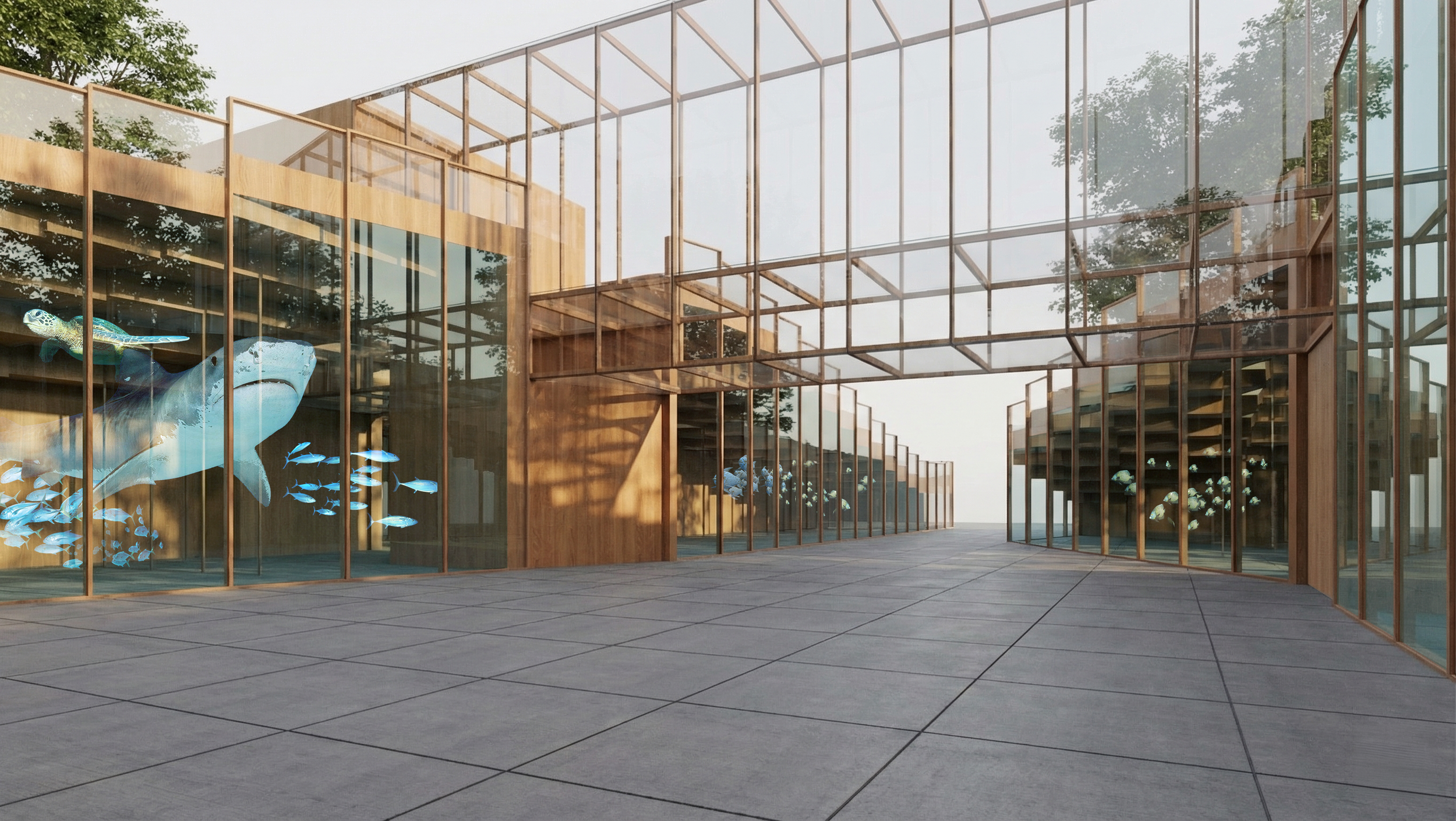
At the heart of the central open plaza lies the pavilion’s technological centrepiece: a high-tech digital aquarium that redefines the boundary between the built environment and the sea. Rather than a traditional containment system, this feature utilises the state-of-the-art Korean-developed LED glass technology, transforming the structural facades into a transparent, interactive canvas. This digital ecosystem serves a dual purpose. Visually, it creates an immersive underwater experience, allowing visitors to engage with virtual marine life that reacts to their presence in real-time. Architecturally, the transparency of the glass ensures that the plaza remains visually connected to the actual North Port Sea view, merging the digital simulation with the physical horizon. By replacing a biological aquarium with a digital one, the project avoids the ecological footprint of captive marine life using 21st century innovation to foster a deep, sensory appreciation for Busan’s maritime heritage. This space stands as a testament to how technology can be used not to replace nature, but to amplify our connection to it.
Subterranean Tunnels to Maritime Peaks
The pavilion is a porous interface offering a non-linear journey of discovery across multiple levels. The ground floor serves as the social engine, anchoring the entrance with a souvenir store before opening into the central plaza and a curated cafe positioned to face the sea. Above, the first floor is dedicated to a serene gallery divided into three distinct exhibition spaces, seamless connected by two transparent glass bridges- an architectural homage to Busan’s fame as a city of iconic bridges.
Access remains entirely flexible, catering to diverse sensory experiences. Visitors may enter through a narrow subterranean tunnel, where minimal daylight and the silhouettes of people crossing the glass bridge above create an intimate, ethereal atmosphere. Alternatively, the more adventurous can hike the unconventional pixelated hills of the roofscape, a sculptural climb that rewards them with panoramic views of the Busan coastline. Through this synthesis of the digital and the earth-bound, Pixel Island demonstrates that the technology of the last century is the key to navigating toward a greener, more balanced planet.