Information
Monolith Air-Grid
Client:
Buildn3r
Location:
Melbourne, Australia
Size:
4,000m²
Collaborators:
Huey Design
Status:
Competition
Program:
Office, event space and retail
Awards:
2021 Office Design Challenge - Finalist
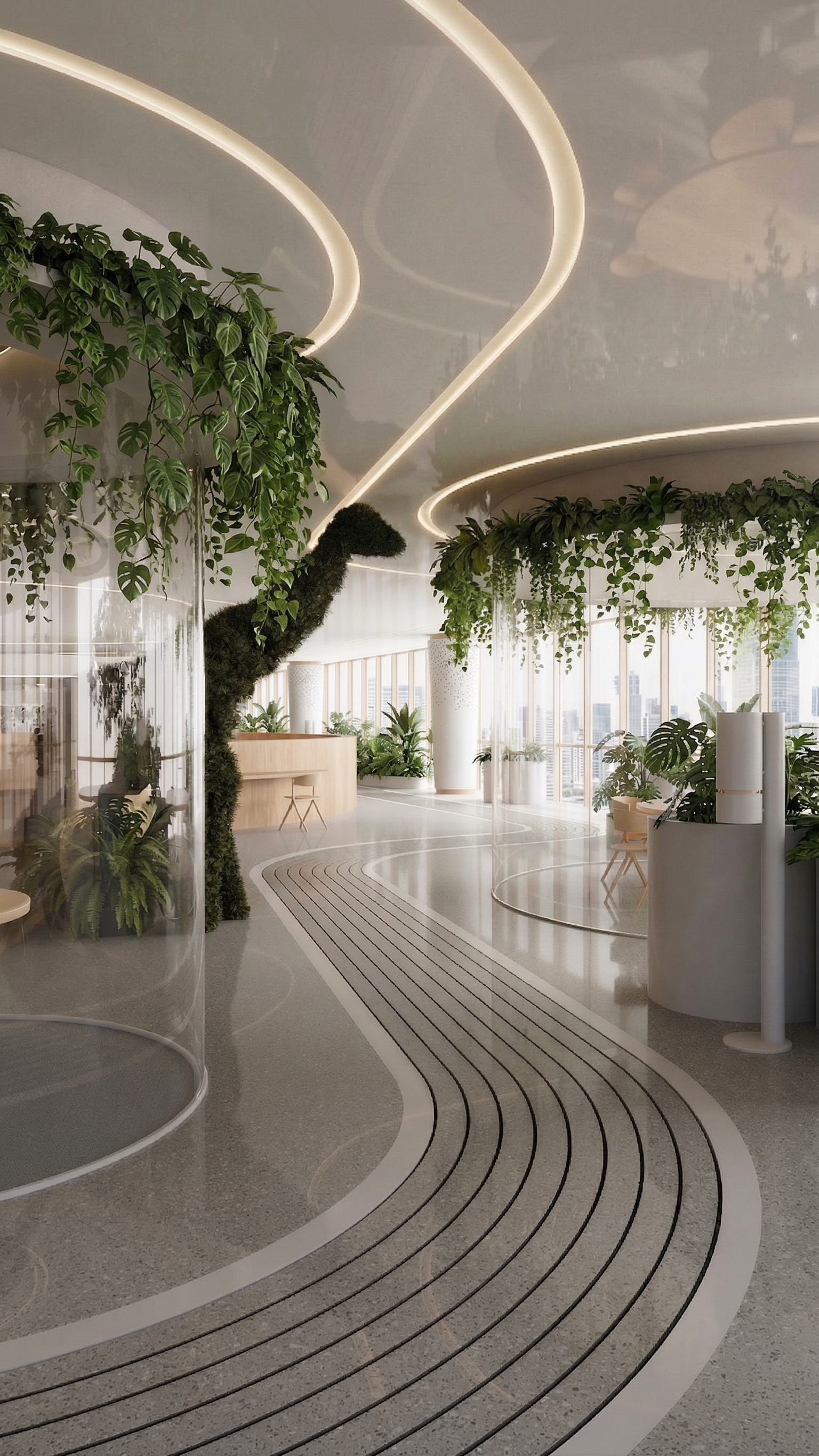
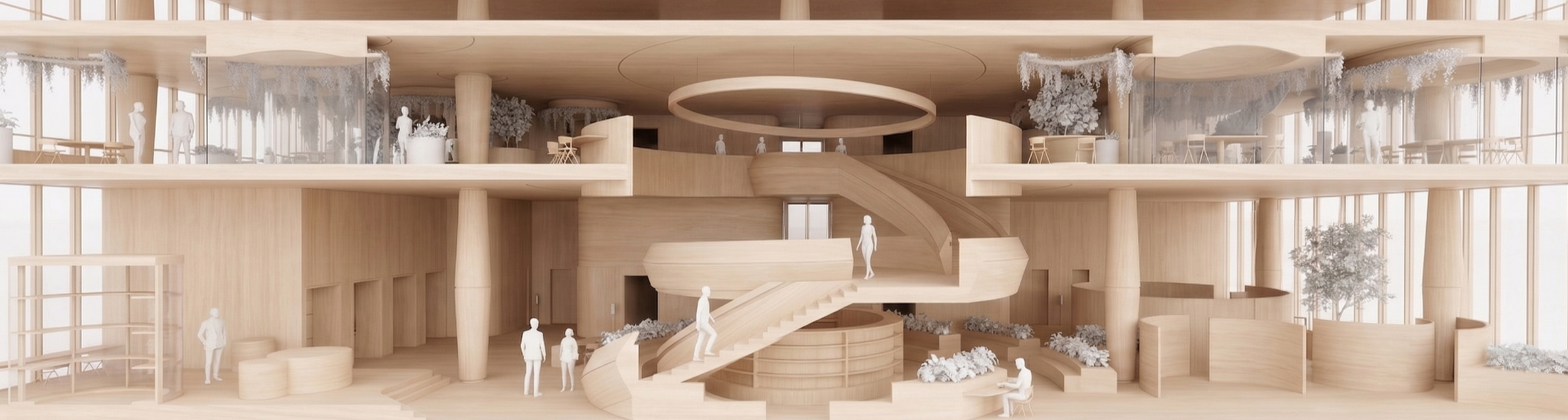
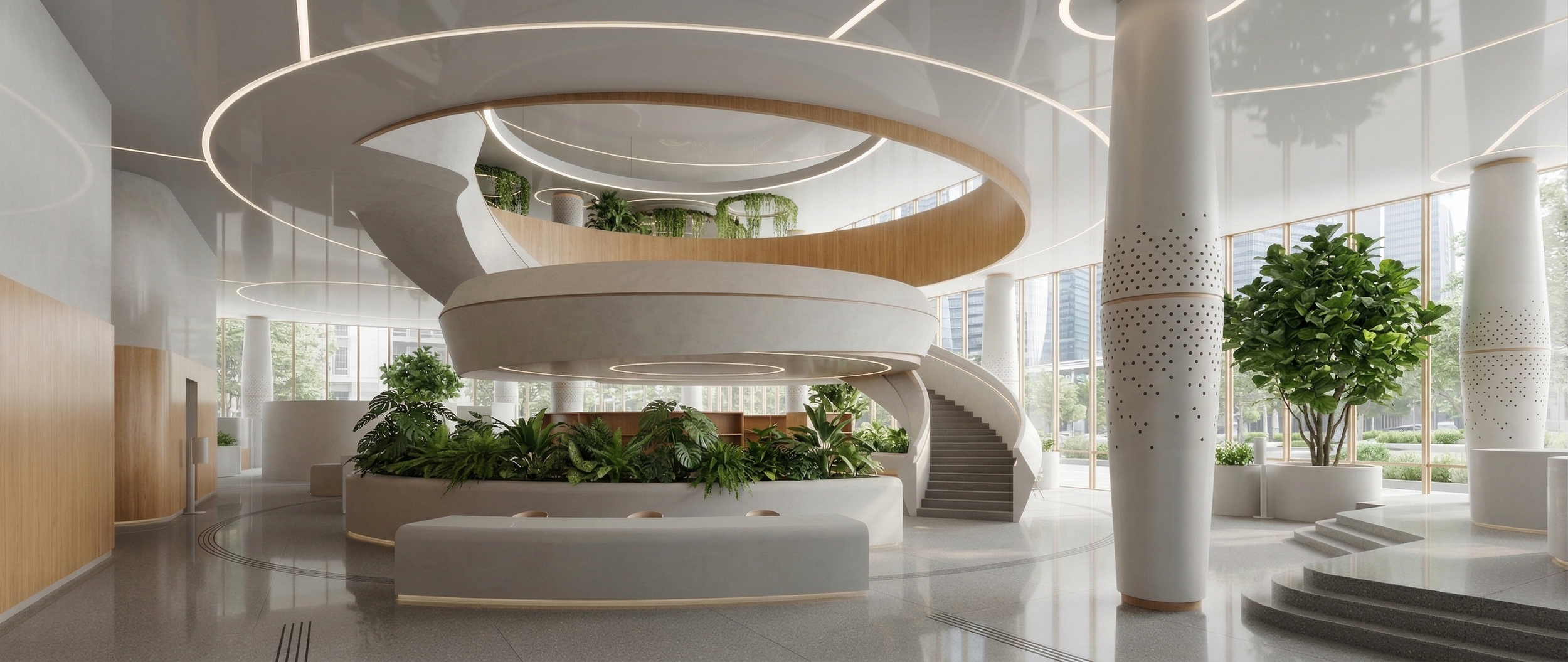
Triggered by the global shift of 2020, this award-winning project serves as a definitive response to the ‘isolation crisis’ exposed by the pandemic. While the remote-work model proved productive, our research identified a critical loss in social synergy and organisational health. In response, KOY_LAB developed this co-working ecosystem- a high-performance environment where biophilic well-being, sustainability, and seamless technology converge to reconnect a fragmented workforce through intentionally designed “collision zones” that spark spontaneous collaboration.
Beyond immediate social restoration, the project is engineered for long-term adaptability. By synthesising circadian-active lighting and automated environmental controls, we moved the focus from static office design to dynamic human performance. This modular framework ensures the space remains a resilient asset, capable of evolving alongside future shifts in technology and density- true to our mission of architecture optimised for the lifecycle, not just the moment.
Atmospheric intelligence
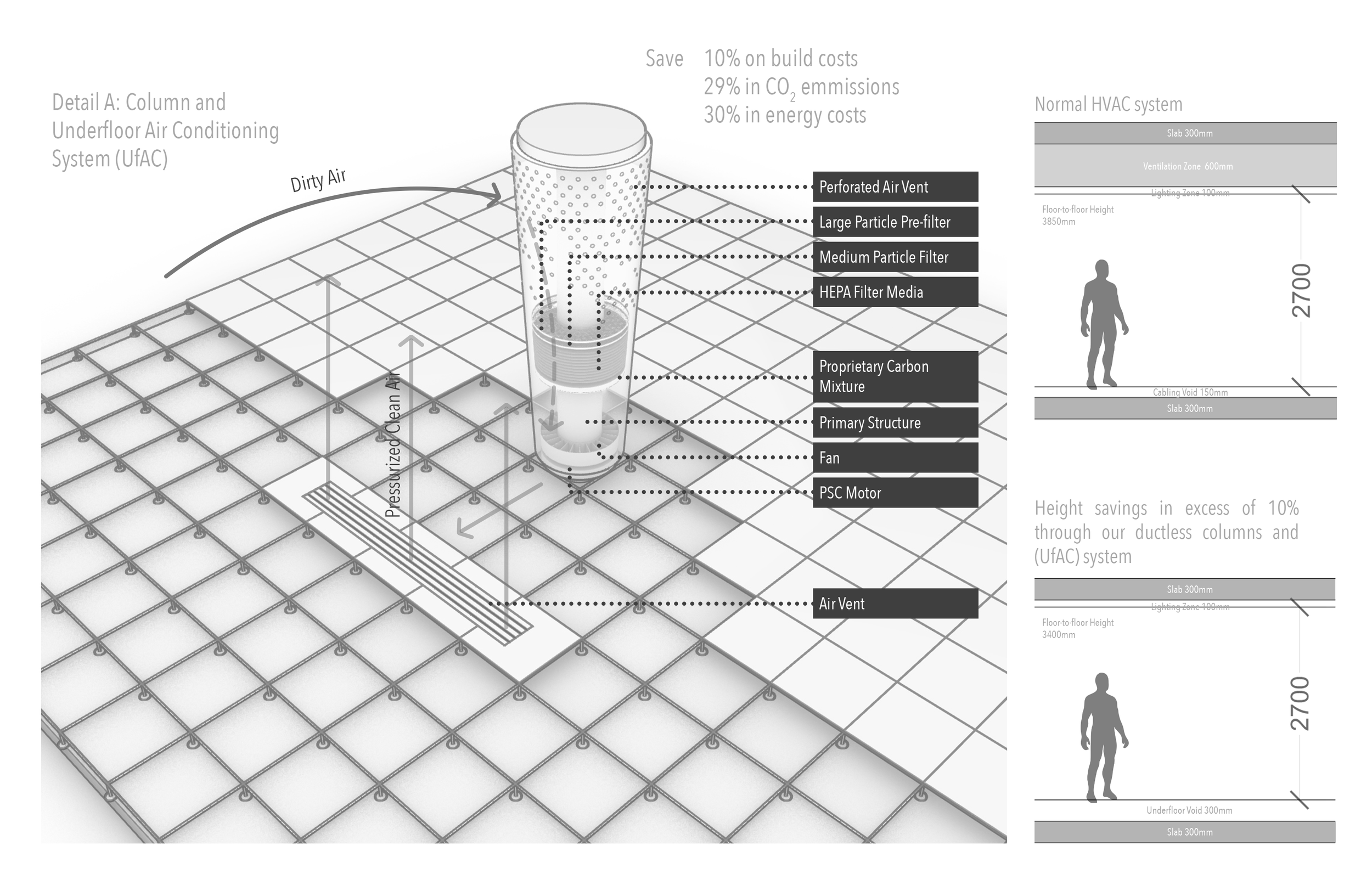
With 68% of the global population projected to inhabit urban areas by 2050, the office tower must evolve from a static workplace into a resilient urban lung. This project serves as a scalable prototype for the future of high-density environments, moving beyond traditional commercial boundaries to prioritise the atmospheric health of the city. By re-engineering the internal climate of the tower, we have established a new benchmark for the safe office- a design strategy capable of being replicated globally to meet the demands of an increasingly densified world.
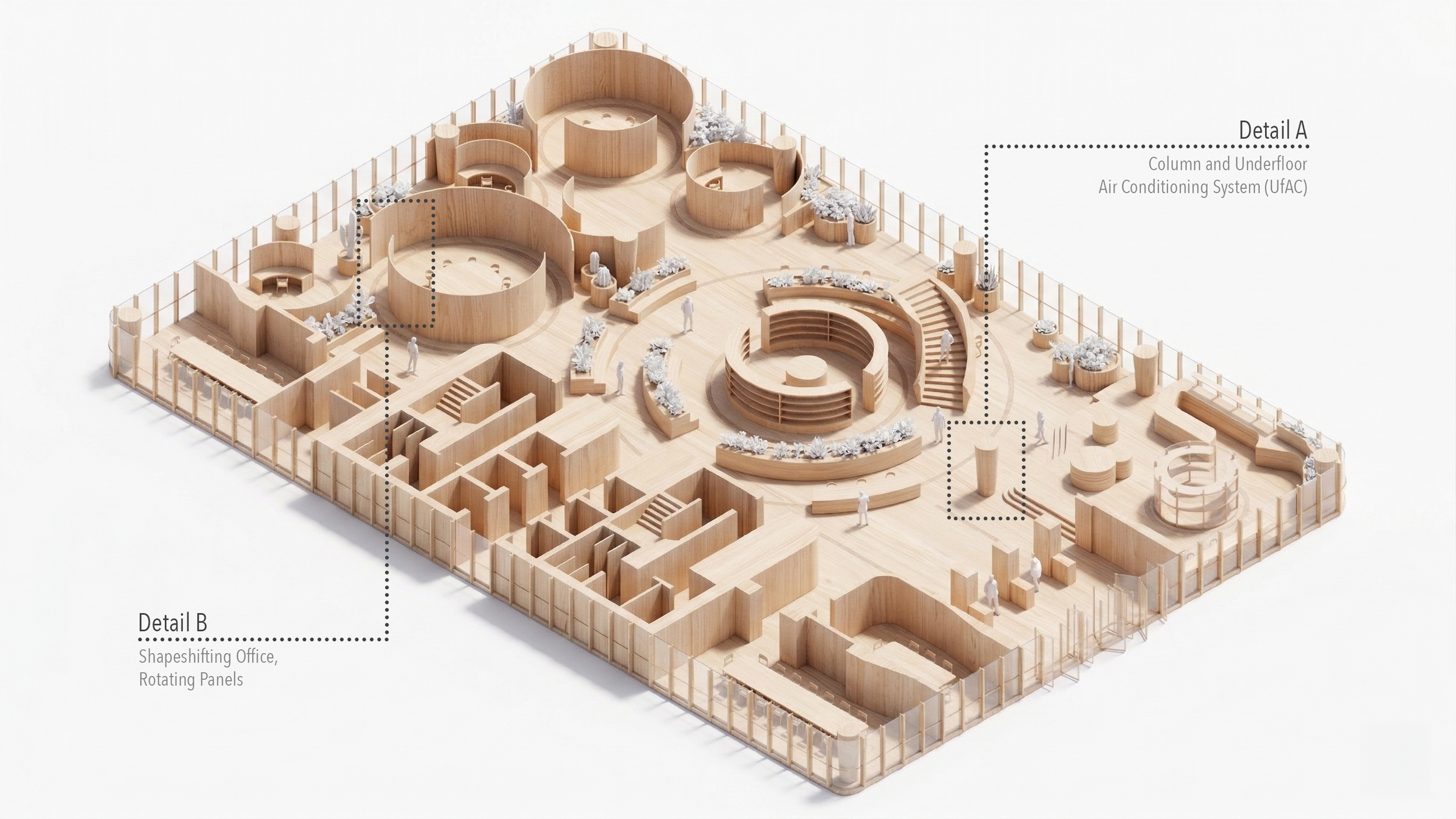
At the core of the intervention is a shift from turbulent, recirculated air to a precision-engineered Underfloor Air Conditioning (UfAC) system. By eliminating traditional ductwork in favour of a pressurised plenum, the design delivers a constant stream of fresh air directly from the floor level, utilising HEPA technology to filter 99.97% of airborne particulates. This displacement ventilation strategy effectively isolates aerosols and minimises transmission risks, ensuring that the lifecycle of the building is defined by the peak biological performance and well-being of its occupants.
Shapeshifting Office
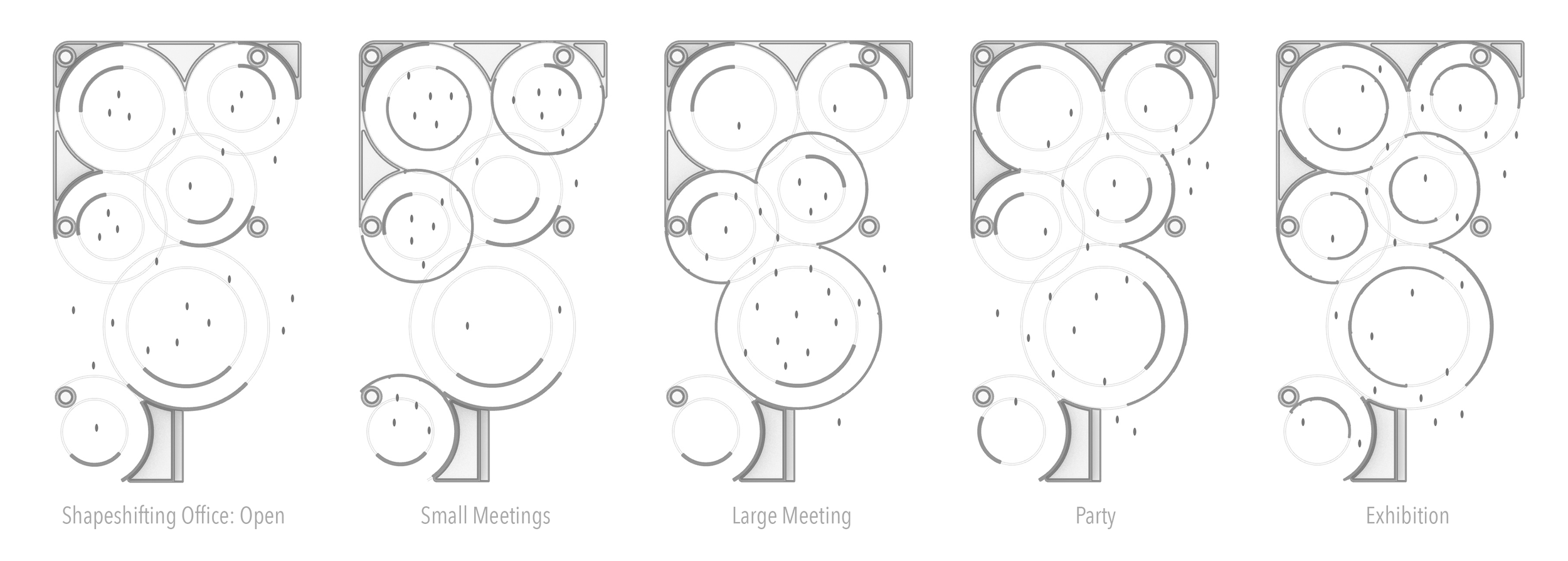
Office environments have undergone a radical metamorphosis over the last half-century, transitioning from rigid cellular cubicles to the fluid, boundary-less landscapes we see today. However, a true challenge lies not in addressing how we work now, but in futureproofing against the inherent uncertainty of tomorrow. This project serves as a physical manifesto for this evolution- a shapeshifting environment designed to pivot quickly as the industries it houses.
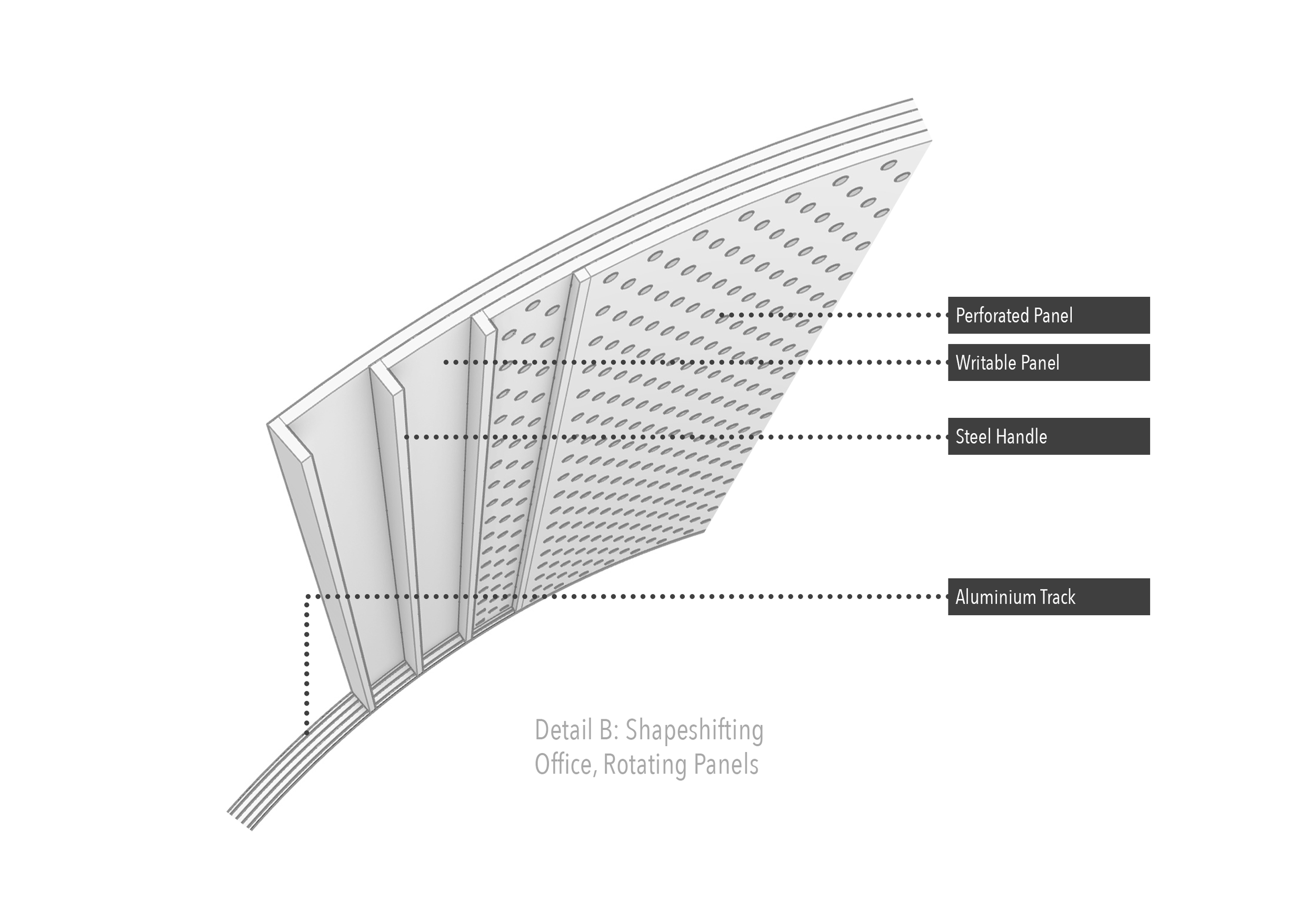
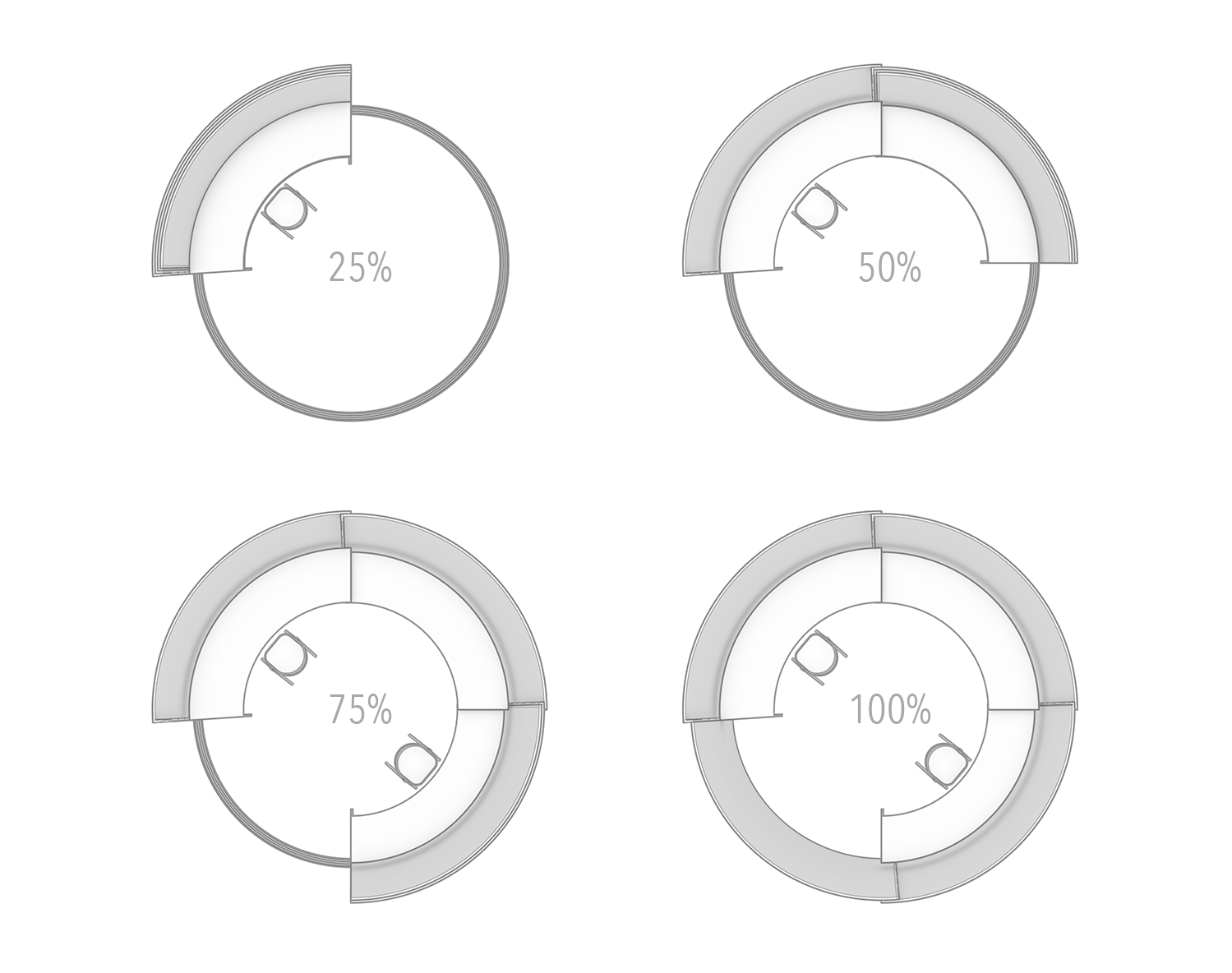
The heart of the intervention lies in a series of a high-performance kinetic panels set upon a precision track system. These are not merely dividers, but architectural instruments. Each panel can extend into a full radius, effectively bisecting the open floor plan into two distinct halves. By manipulating these arcs, users can transition from a singular expansive hall to a series of private pockets for deep focus. This allows creativity to run wild, enabling a limitless variety of workspace combinations that can be reconfigured in minutes, not months.
To ensure total spatial harmony, we applied this same logic of extension and rotation to a bespoke furniture collection. The extendable rotating tables act as a modular extension of the architecture itself. Crucially, these pieces maintain a nomadic independence. By decoupling the furniture from the rotating wall panels, we have achieved a higher tier of spatial agility. These elements remain fully portable, allowing the team to curate their own micro-environments without being tethered to a fixed structural point. We aren’t just building for the needs of today, we are providing the spatial vocabulary for whatever comes next.