Information
Dialogue Station
Client:
Pertubuhan Akitek Malaysia Sarawak Chapter, Majlis Bandaraya Kuching Selatan
Location:
Kuching, Malaysia
Size:
20m²
Collaborators:
Huey Design
Status:
Competition
Program:
Bus stop
Awards:
PAMSC-MBKS Bus Stop Design Competition 2021 - Honorary Mention
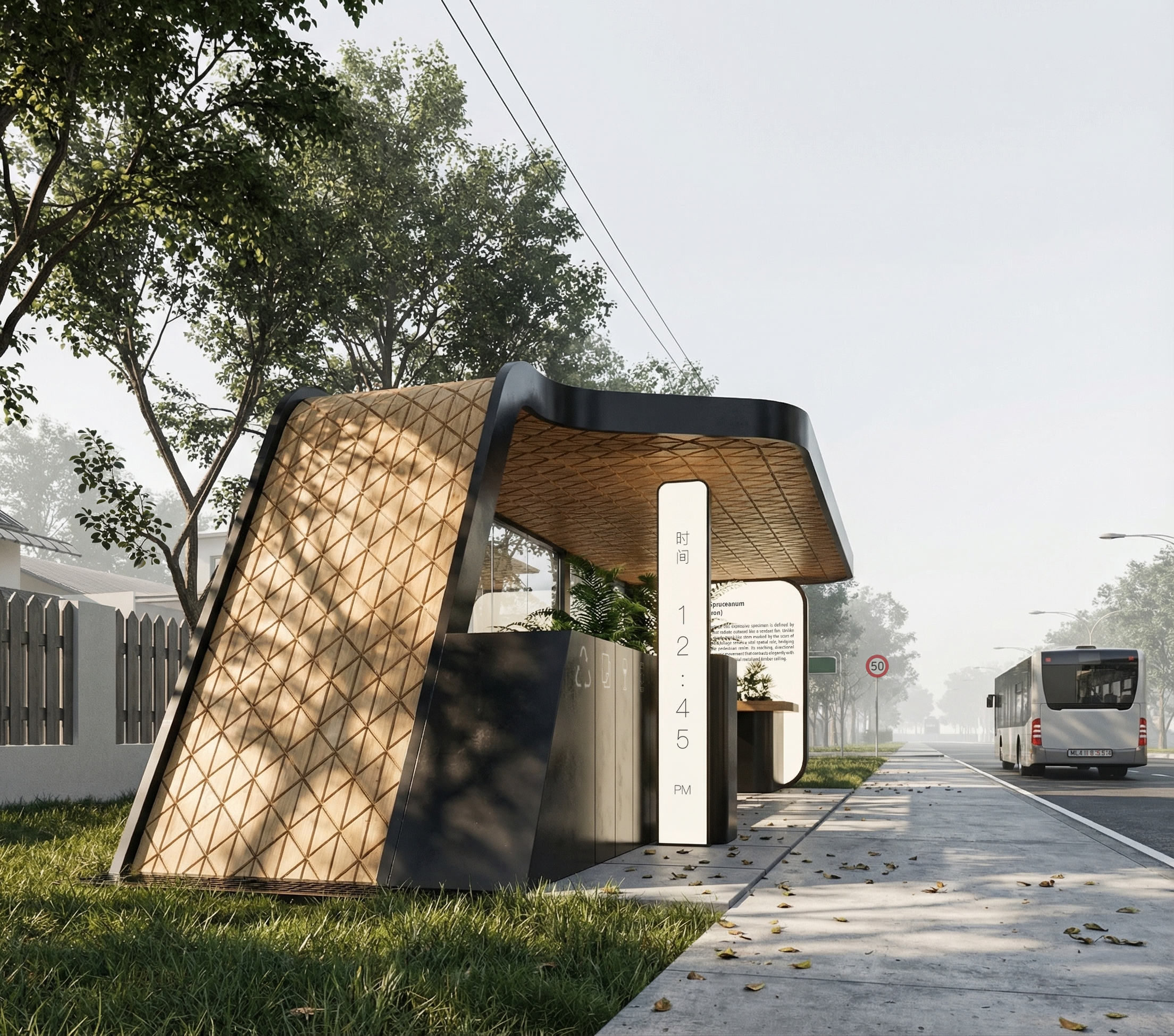
In the modern urban fabric, the bus stop is often a neglected typology- a site of social friction where linear seating mandates isolation. Standard street furniture forces commuters into a state of digital withdrawal, facing the road while remaining disconnected from the community in the surrounding. Dialogue Station is a tactical intervention that challenges this passive waiting culture. It operates on the principle that spatial configuration is a primary driver of human connectivity, transforming a mundane transit node into a high-performance social engine.
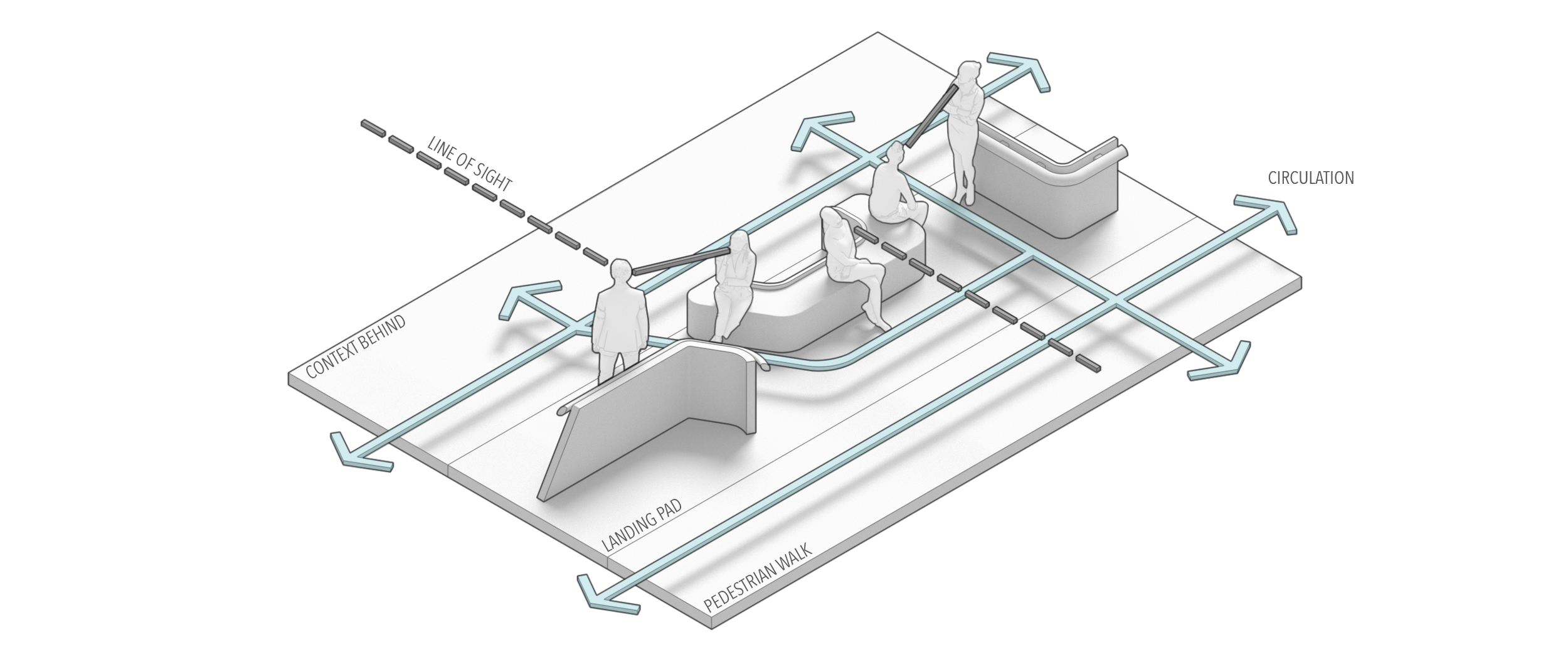
The Architecture of Encounter
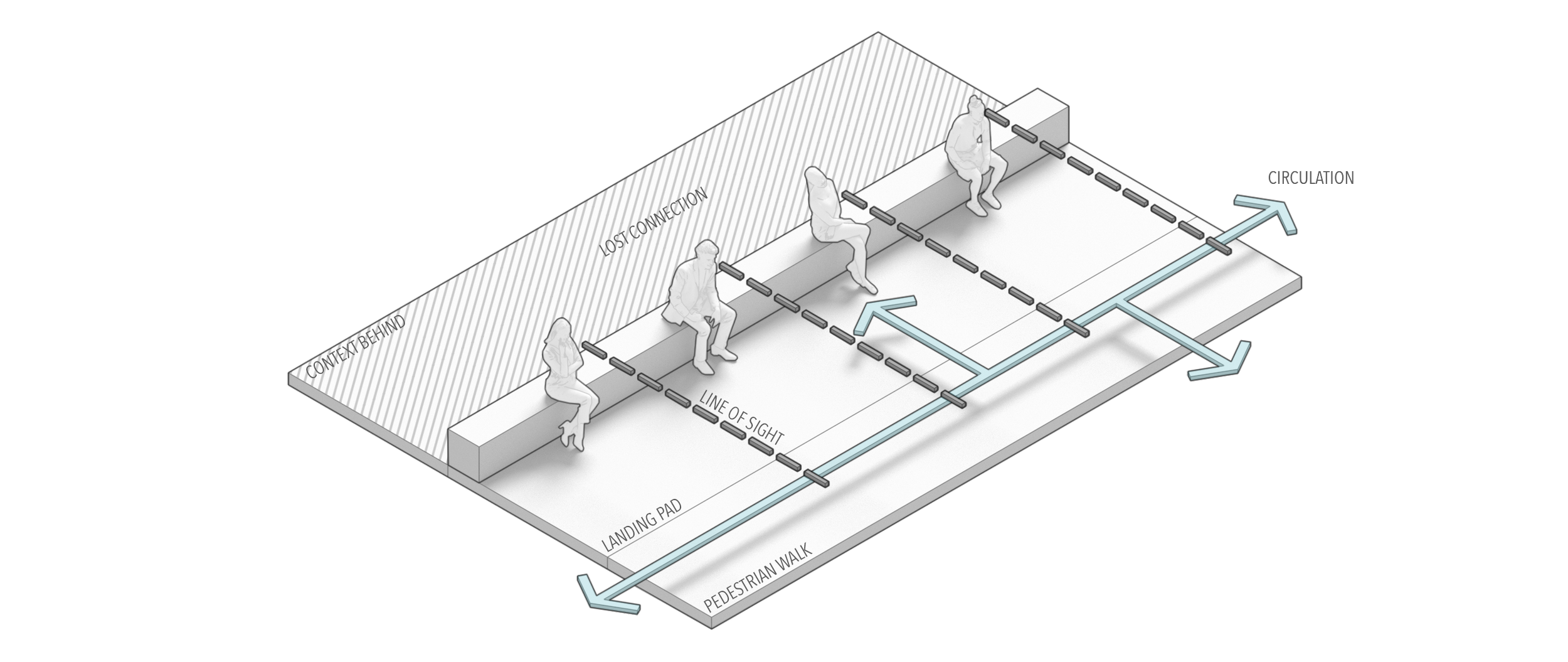
The project reconfigures the traditional spatial logic of the streetscape by introducing a clustered seating morphology. By breaking the horizontal line and prioritising face-to-face proximity, the design choreographs natural interaction. This porous interface dissolves the boundary between the transit point and the neighbourhood, integrating the passenger back into the pedestrian fabric of Kuching South. It is an architecture of encounter, where the wait becomes an opportunity for communal exchange rather than a period of isolation.
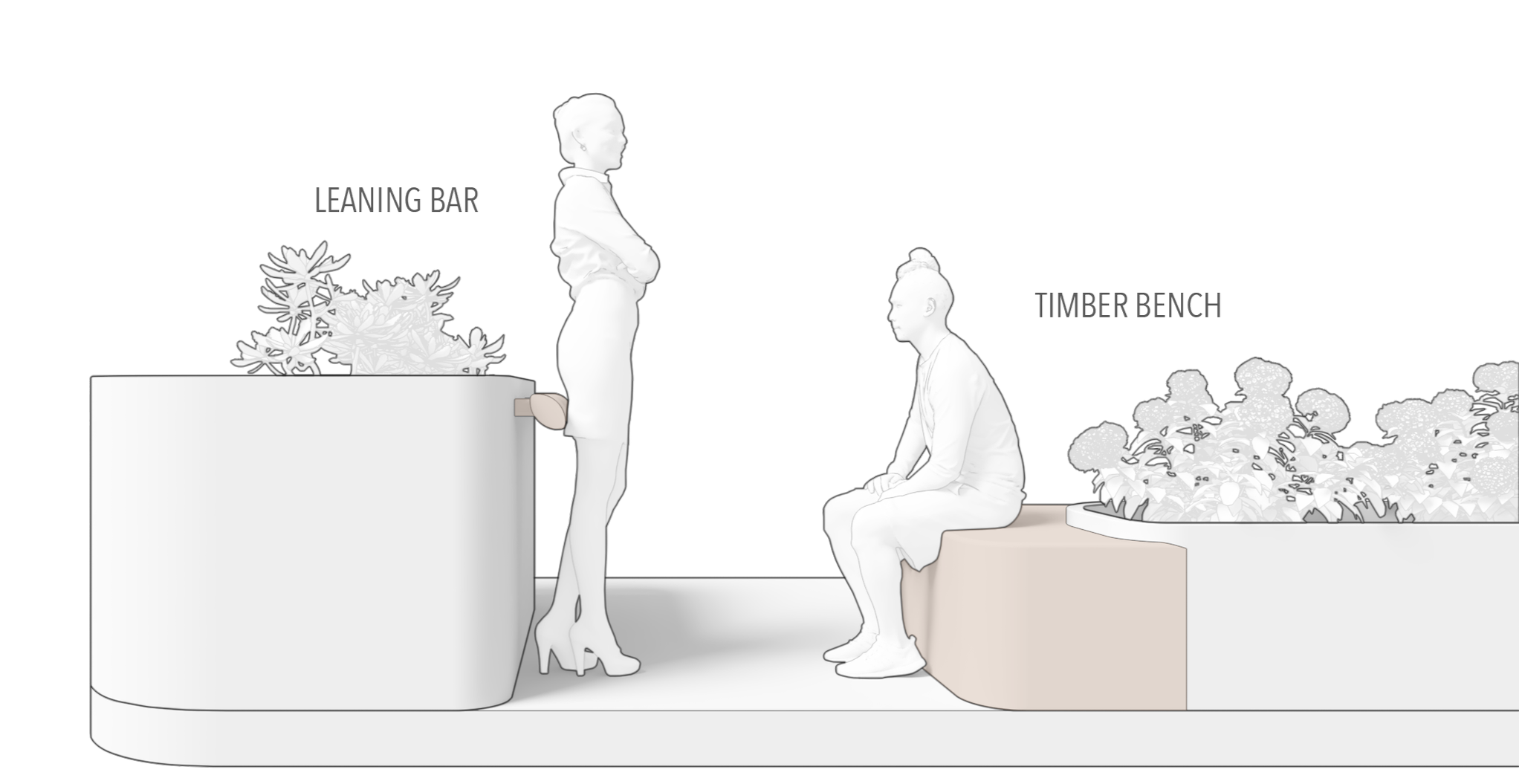
Active Ergonomics
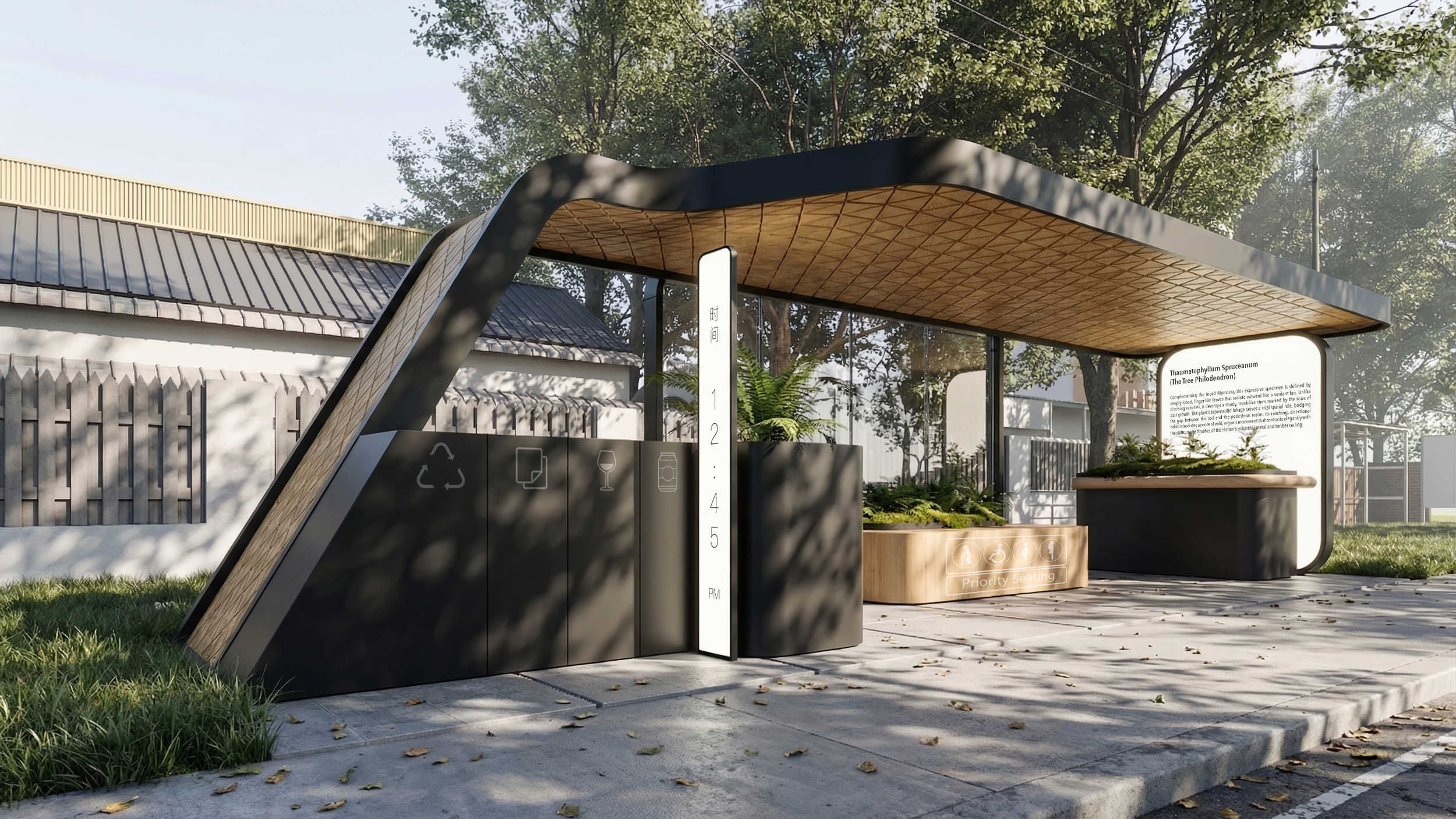
A resilient city is built on the health of its citizens. Dialogue Station introduces a hierarchy of seating typologies designed to promote active waiting. Alongside traditional timber benches, the inclusion of ergonomic leaning bars serves as a subtle behavioural nudge. Based on metabolic research, leaning increases caloric expenditure by 0.15kcal per minute over sitting. This integration of active ergonomics turns a static moment into a period of micro-activity, demonstrating how small-scale urban infrastructure can contribute to the long-term wellness of a population.
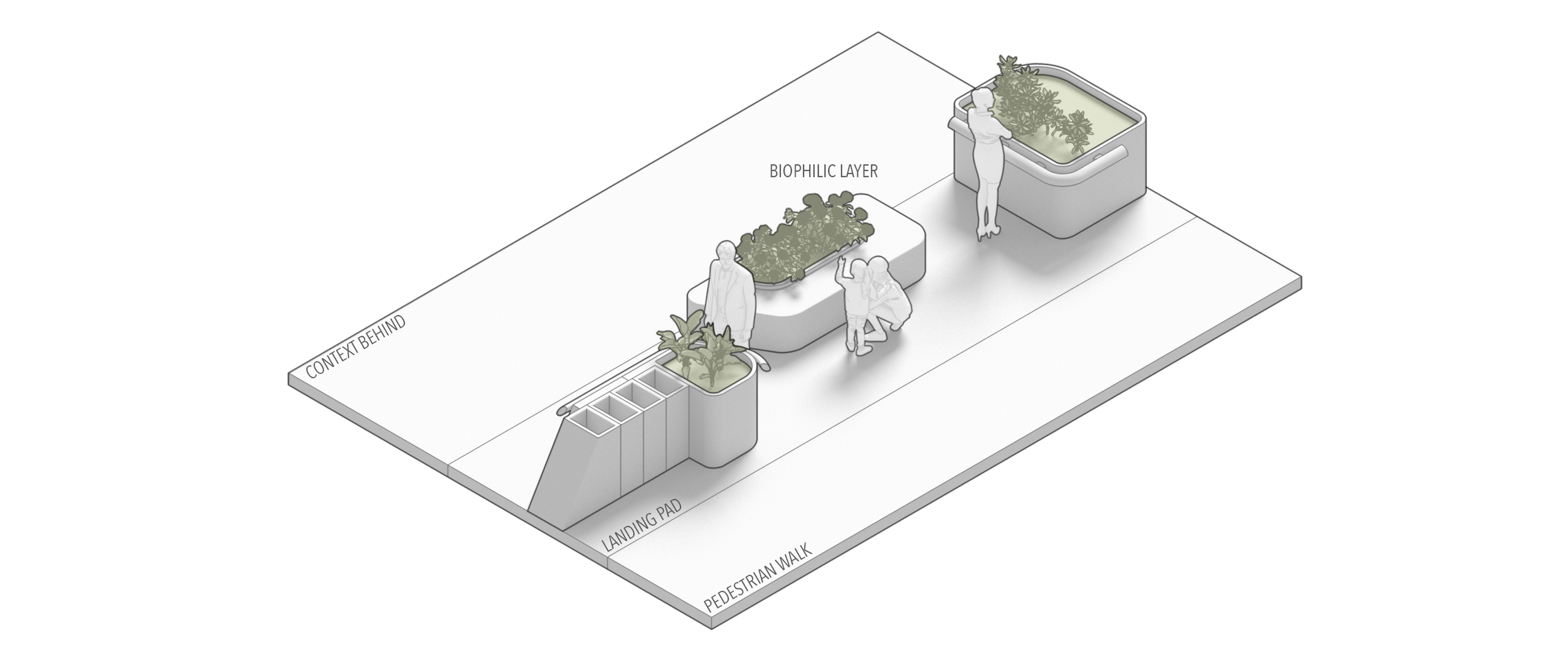
Micro-herbarium
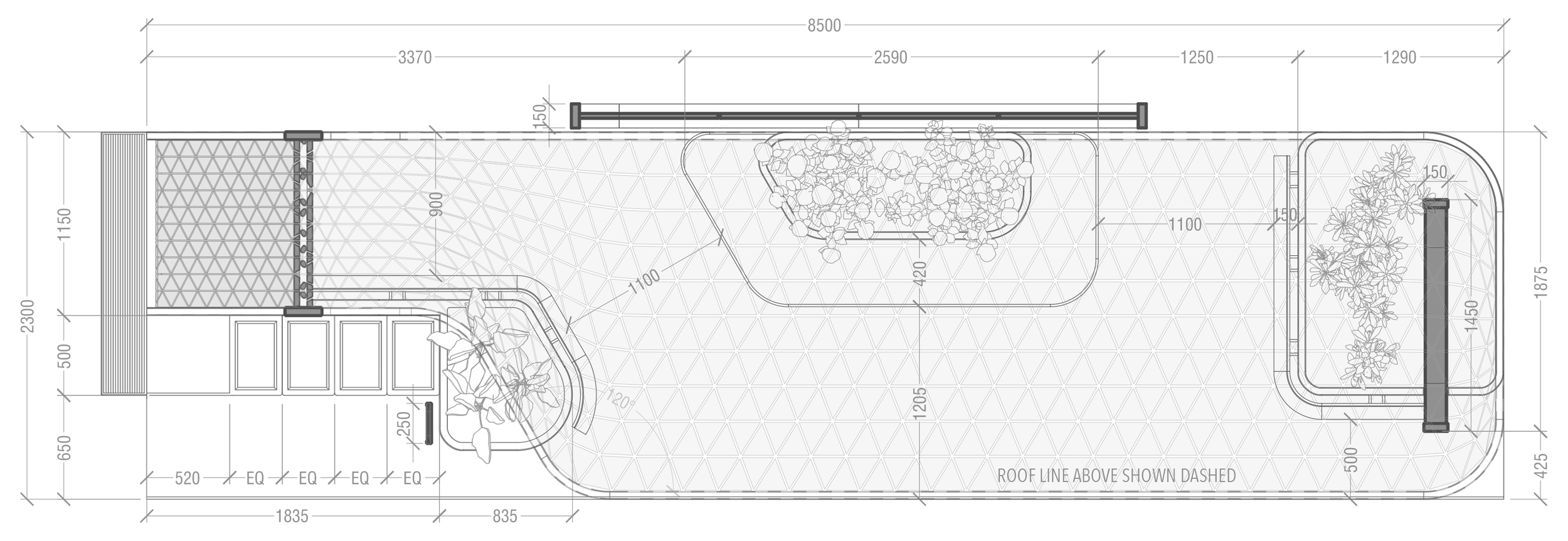
Rather than treating greenery as a decorative afterthought, the station features a series of integrated planter modules precisely inserted into the primary structural frame. This biophilic layer transform the shelter into a living pedagogical tool and a functional urban herbarium. By embedding a curated selection of local plant species directly into these structural voids, the design allows commuters to engage with the biodiversity of Sarawak during their daily journey. This seamless synthesis of social life and environmental intelligence fosters a culture of stewardship, proving that even the most functional civic structures can raise ecological awareness and enhance the urban experience.